

Within the southern Soda Plant corridors dwells our newly dubbed ‘Outer Space Gallery’ where we will be hosting a rotational exhibition of our Member Artists works. These will be 2-3 month curations showcasing a larger body of work by select artists, in between main gallery exhibitions that sometimes flow into the hall spaces. We hope you enjoy seeing a larger breath of work by some of our talented Artist Members!
The Soda Plant is in the heart of the arts district at 266 Pine St. Burlington, VT. Open to the public 7 days a week typically 8am-8pm (hours vary depending on which businesses are open). You can learn more about the creative hub that is The Soda Plant HERE.
June/July Spotlight welcomes painter Alan Zola Shulman and astro photographer Jon Gazzillo. Read more about their process and body of work below!
Portraits of Zinkov: by S.P.A.C.E. Gallery Artist Member Alan Zola Shulman
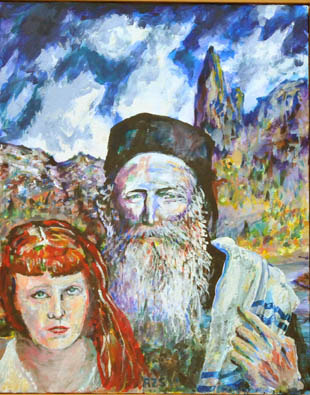
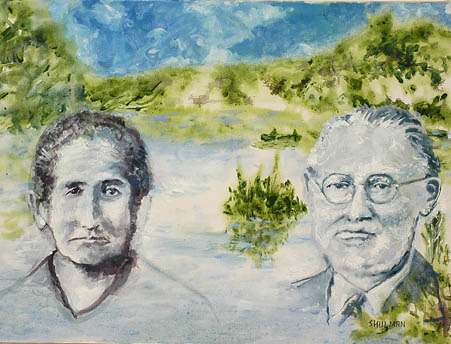
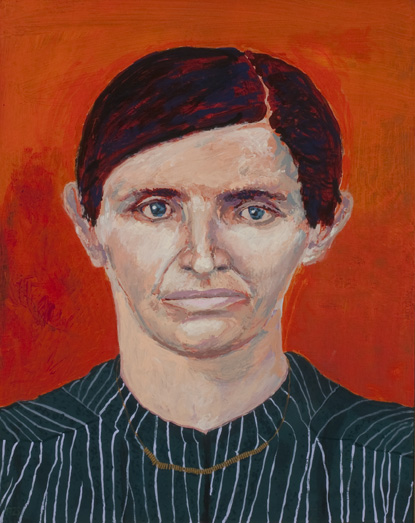
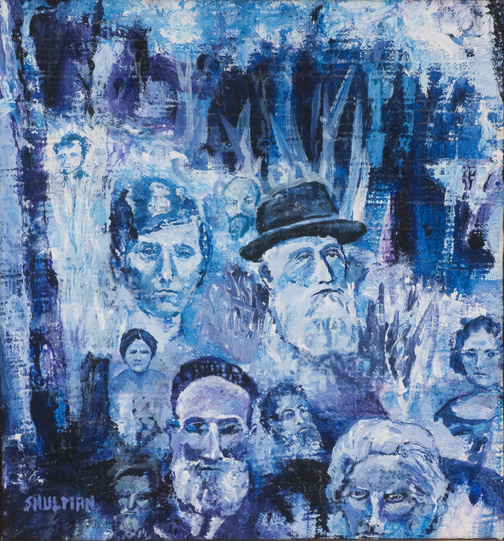
I grew up in New York City, the son of a father born in Ukraine; the grandson of four grandparents from Ukraine, three of whom grew up in Zinkov. My parents firmly believed in the importance of European culture, specifically classical music and fine art. They exposed my sister and me, almost every weekend, to a major NYC art museum. Gallery after gallery, we all walked by the work of the masters from the Renaissance to those breaking new ground, defying old conventions. Those latter artists excited me. I fell in love with Van Gogh’s swirls of land and sky, Picasso’s expressive and “misplaced” eyes, De Chirico’s enigmatic city squares,
Rousseau’s primitive animals and plants, Dali’s dreamscapes, Matisse’s unpredictable palette, Magritte’s avant-garde humor, and Kandinsky’s energetic splashes of multi-colored solids and lines: I borrowed many of these influences in early home and school artwork.
Despite picking a time-consuming career as an architect, I found mentors to spur my art interests at Illinois Institute of Technology’s School of Architecture in Nelli Bar and Paul Wieghardt, Bauhaus refugees, and with Louis Johnson, a prominent Chicago architect. They trained us with ten-second action sketching to capture motion, with hand-eye coordination tasks to sync eye and hand, and through visual training in color, texture, and composition. Again, in the mid-1980s, as a self-employed architect, I found time for painting inspiration in workshops of Peter London (“No More Secondhand Art”) and with Canadian National Gallery painter Seymour Segal. Both men encouraged us to pursue our own means of expression, to follow our unique paths spurred by challenging exercises we hadn’t ever experienced.
During this same period, my mother handed me the “Zinkover Memorial Book” which her father had helped put together. Though I initially set the book aside, by the early 1990s my children had moved on with their lives, and I found myself seeking an understanding of my ancestors in much the same way that New Englanders do when researching their colonial forbearers. At my Bar Mitzvah, I’d met two aunts who had left Zinkov and emigrated to Argentina. Beyond that encounter, I had ignored my family’s past for most of my life. Now, I was face to face with it in that Zinkov memorial book.
Fascinated by the images it held, I began painting portraits of the people shown in these tiny black and white photos, including one of my great-grandfather, his daughter Eeteh with her husband, and their two girls. Brandeis emeritus professor Murray Sachs helped me by translating the book’s Yiddish and Hebrew text. Professor Robert Bernheim of University of Maine/Augusta provided the detailed history of the Nazis invasion of Zinkov: They forced its Jews into a ghetto, starved them, and finally rounded them up for slaughter and burial in mass graves.
Two artist residencies, one in Patzcuaro, Mexico (2001), the other at Georgia’s Hambidge Center for the Arts and Sciences (2002), were crucial to the completion of these approximately eighty portraits. Since retiring from architecture and a second career as a special educator, I’ve exhibited “Portraits of Zinkov” at Holocaust Museums, in schools, synagogues, and community gatherings. While I continue to create paintings with many other themes, “Portraits of Zinkov” has continued the remembrance of Holocaust victims my grandfather helped initiate. I consider it my most important work.
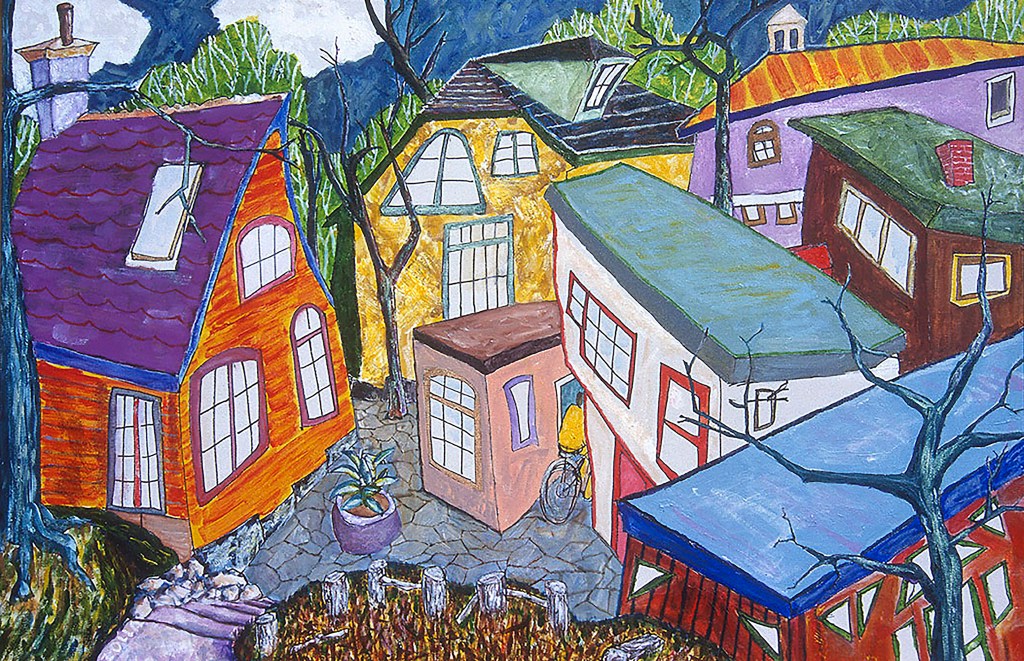
Alan’s Artist Statement:
I paint portraits, towns, cities, land/sea/cloudscapes, experience and mood abstracts, art for children, places visited and/or imagined, and historical, political, environmental or social/emotional subjects. I usually start by sketching with ink some observed reality; then modify it when I move to paint on canvas. Acrylic paint on canvas is my standard medium: Acrylics set up, mix, apply, and manipulate easily; important features, as my paintings often evolve, and even change significantly, as I work. Style variations convey my intentions via bright and/or contrasting color, a variety of brush strokes, perspective and proportion manipulation, and with memory and dream often modifying that reality. In painting my experience and its expressive possibilities, or in relating a narrative, I hope to offer the viewer an opportunity to consider his/her own journey and experiences for reflection.
You can learn more about Alan’s work on his WEBSITE
The S.P.A.C.E. Gallery Featured Member Artist: Jon Gazzillo
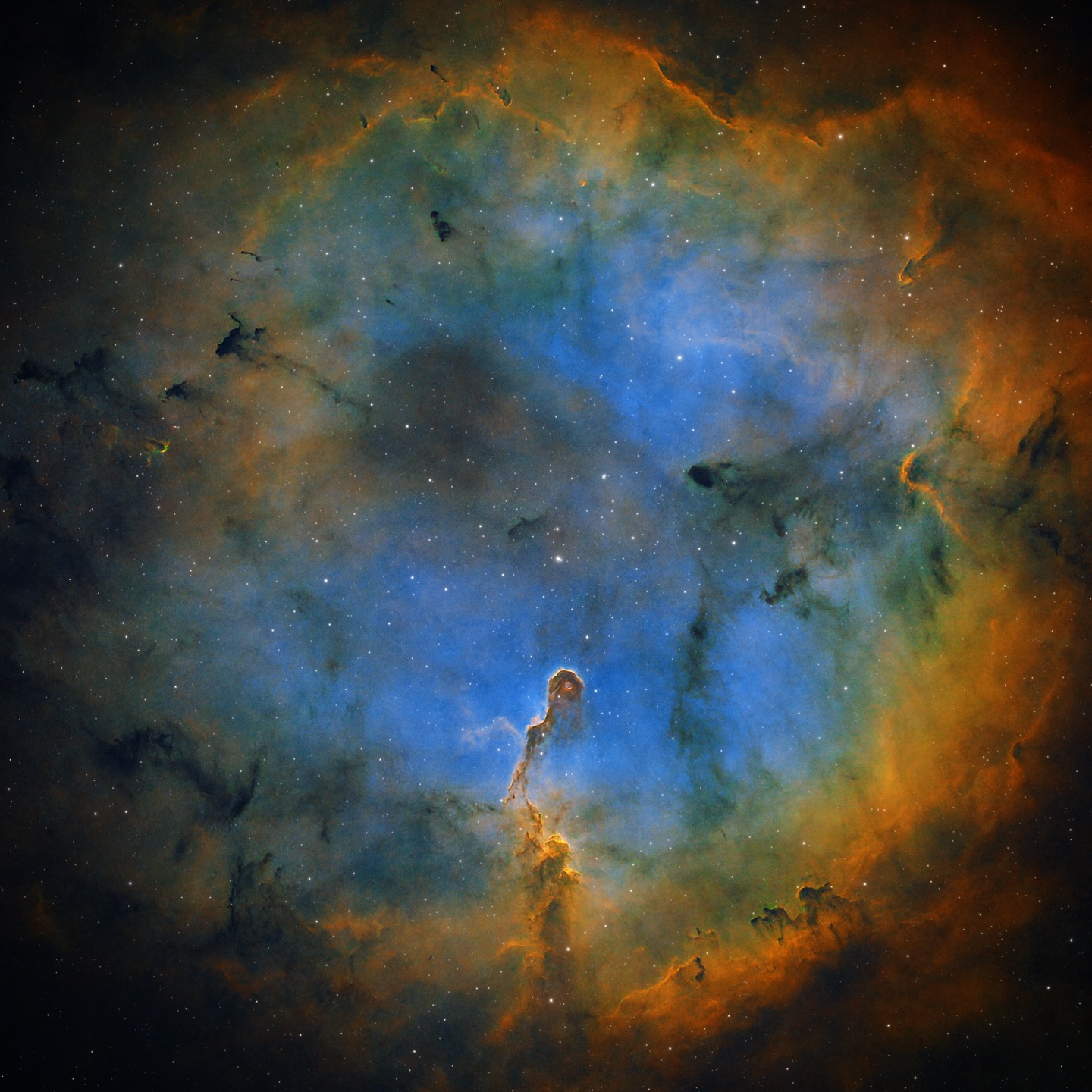

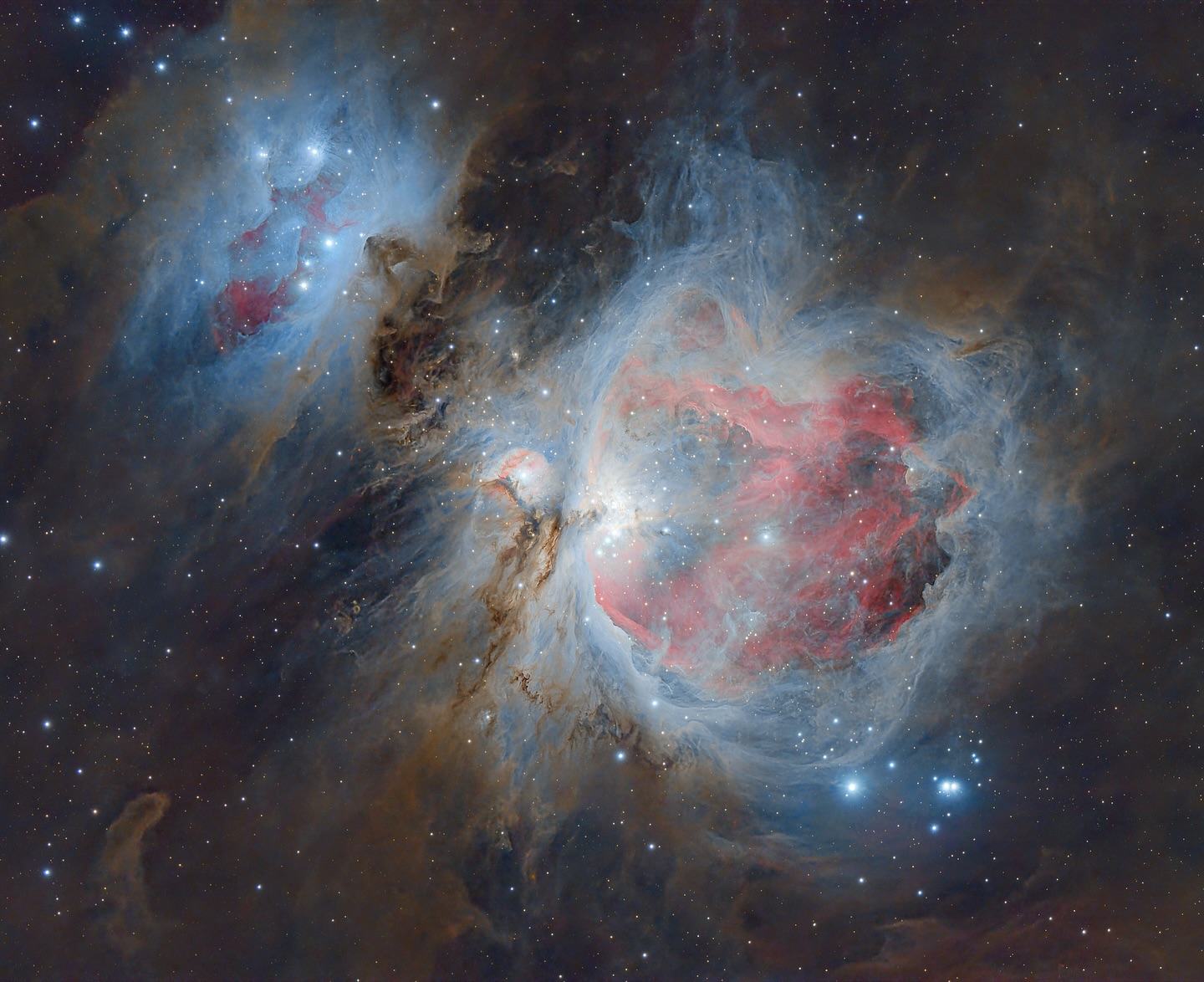
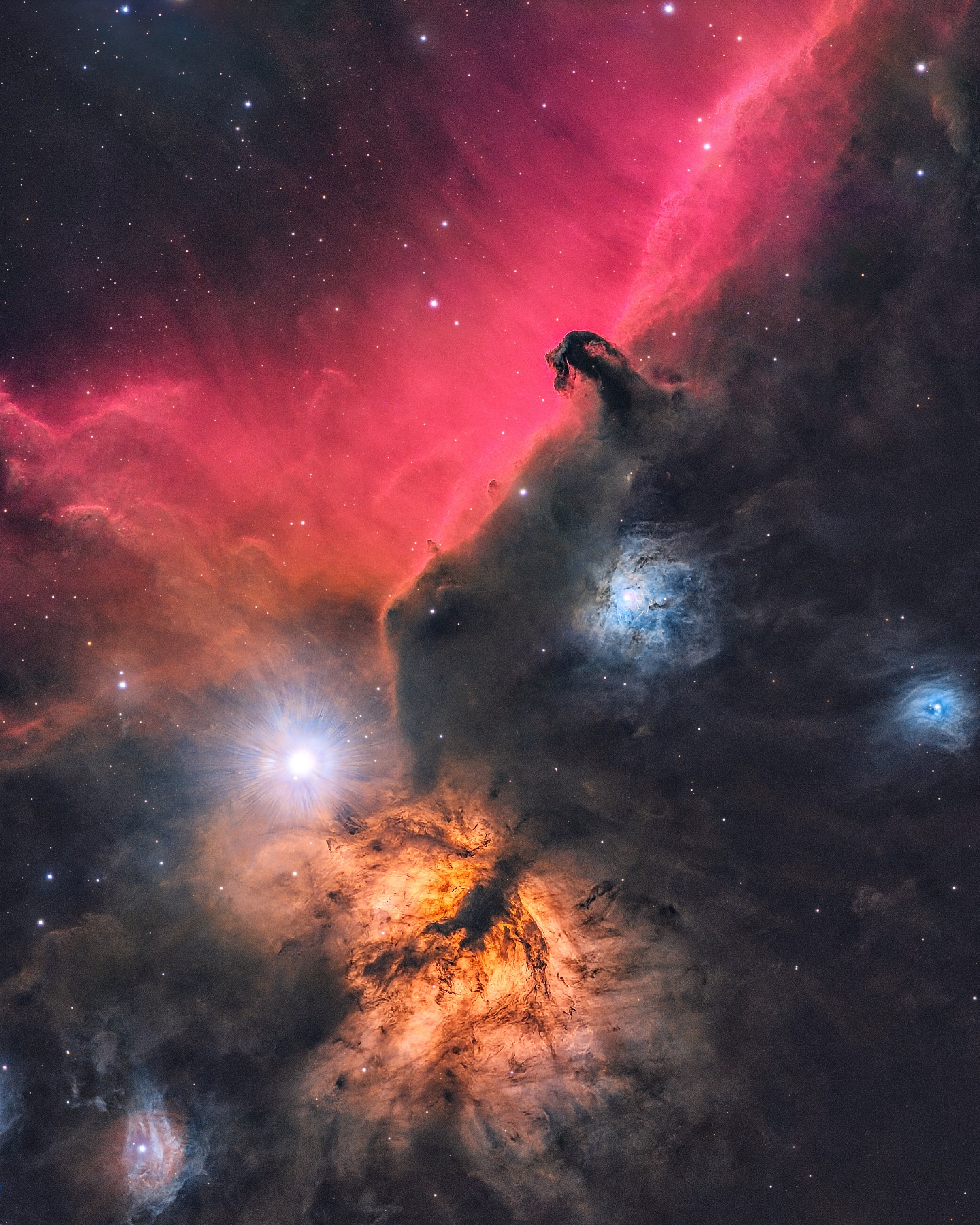
Jon’s Artist Statement:
Astrophotography is the art of photographing the night sky. I grew up alongside the Hubble space telescope and have always been fascinated with its images of deep space objects. About three years ago, I found out that deep space astrophotography was not only possible for amateurs but could also be done right in my backyard. Effectively capturing distant and faint deep space objects requires specialized equipment and long exposure times.
The main components of a deep space astrophotography rig are the telescope, camera and tracking mount. The mount is the most important piece of equipment and is responsible for keeping the telescope pointed at the same object in the sky. This ensures that everything in frame remains still while taking a long exposure therefore negating any motion blur in the images. I typically image the same object for several nights, collecting as much light as possible. For dimmer objects, I use five minute exposures and take as many of those as possible throughout the night. Those exposures are then stacked together in software to combine all the data into one image file. That file is then carefully processed to create a final image.”
You can follow along with Jon’s work on instagram @vermont_astro
For purchase inquiries please contact spacegalleryvt@gmail.com
Filed under: Uncategorized | Tagged: alan zola shulman, Art, art exhibition, Art Gallery, Art in Burlington, astronomy, Burlington Art, celestial art, Exhibition, exhibitions, jon gazzillo, painting, South End Arts District, Space Gallery, The S.P.A.C.E. Gallery, The Space Gallery, travel, Vermont Art, Vermont Art Gallery, zinkov |
 The S.P.A.C.E. Gallery
Leave a comment